Alright. This is the big one. The one I could argue about until the sun comes up, and have, ask my cousins, ask my neighbors, ask the poor tourists trapped in my van while I rank fillings unprompted for twenty minutes on the airport highway.
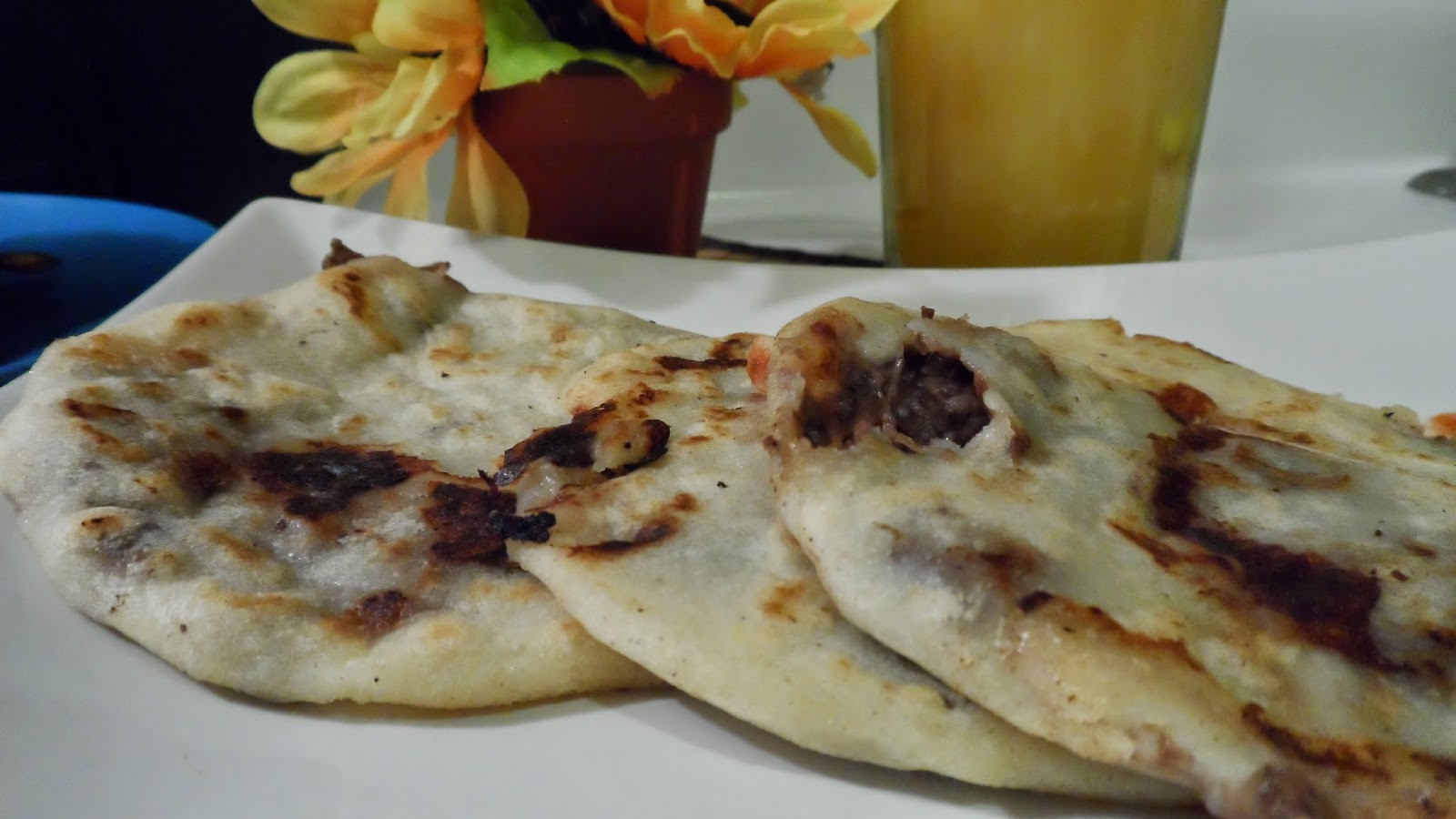
Pupusas are our national dish, but calling them that undersells it. They’re our identity on a plate. Thick handmade tortillas of corn or rice, stuffed with cheese, refried beans, chicharrón, loroco, a little flower bud, slightly herby, very much ours — or whatever the cook feels like that day, pressed flat between two palms and slapped onto a hot griddle. You hear a pupusería before you see it: that rhythmic clap-clap-clap of hands shaping masa is the background music of every Salvadoran evening of my life. They come with curtido, a tangy fermented cabbage slaw, and a thin tomato sauce, and you eat them with your hands, and they cost about a dollar, and they are perfect.
We even have a national holiday for them, second Sunday of November, Día Nacional de las Pupusas. A country that gives its food a federal holiday is a country with its priorities straight, in my opinion.
Every single Salvadoran carries a strong, completely non-negotiable opinion about where the best ones are. Grandmothers have ended conversations over this. So understand that what follows isn’t a neutral guide. These are mine, and I’ll defend every one of them.
1. Olocuilta — the whole town.
Twenty minutes from San Salvador on the airport highway sits the birthplace of the rice pupusa, and it’s not one restaurant, it’s an entire strip of pupuserías stacked side by side, all competing for your stomach. Rice-flour pupusas come out crispier and lighter than the corn ones, the edges go golden and almost crackle. If you make one pupusa pilgrimage in your life, make it this one. I stop here on airport runs constantly, sometimes with guests who landed forty minutes earlier. Welcome to El Salvador, here’s lunch, the country starts now.
2. Pupusería Barbarita #2, Olocuilta.
These folks went a bit wild and I deeply respect it. Seafood-and-chorizo monsters. Birria pupusas. Spinach. Even blackberry combinations that should not work and somehow do. Most of them still under three bucks, which is the part that breaks visitors’ brains. Purists grumble about places like this, and look, I get it, but watching a kitchen play jazz with a five-hundred-year-old dish is its own kind of tradition. Go hungry and order strange.
3. La Carmencha, Olocuilta.
And then, when you’re done with the experiments, this is the counterweight, the perfect classic, no gimmicks, executed ten thousand times until it became muscle memory. It’s a local favorite and the line that forms tells you everything. Sometimes the best version of a thing is just the plain one made by someone who refuses to make it badly.
4. Planes de Renderos – the pupusódromo.
Up in the hills directly above the capital, where the air goes cool and the whole city spreads out below you in lights. Rows and rows of griddles all going at once, families piling out of cars, steam everywhere. This is a proper San Salvador weekend tradition, pupusas with a view is about as good as a cheap night out gets anywhere on earth. Take a sweater though. People never believe me that El Salvador gets chilly, and then theres goosebumps by eight o’clock.
5. El Triángulo and the highway clusters.
All over the country you’ll find these spots where ten pupuserías pile up right next to each other, identical at first glance. The move is simple: walk the row slowly, let your nose do the work, watch whose griddle is busiest and whose curtido looks freshest, and commit. There are no wrong answers in a cluster like this. There are only degrees of right.
6. Any roadside señora after 5pm.
Listen to me, because this might be the most important entry on the list. Pupusas are dinner food here, not breakfast, the griddles light up in the late afternoon and the country eats them at night. And the best pupusas I have ever eaten in my life were not at any place with a name. They were rolled by a woman who’d been making them for thirty years outside her own front door, no sign, no menu, a single plastic table, charging a dollar. Those beat any restaurant. Every single time. The hands matter more than the address.
7. Pupusas de queso con loroco.
Switching from places to fillings, because the filling debate is half the war. If you try only one, make it this. Loroco is a vine flower bud that grows here and almost nowhere else, and it gives the melted cheese this gentle, green, herbal lift you genuinely cannot find in any other food. I’ve tried to describe the flavor to foreigners a hundred times and always land short. It tastes like home to me, even when I can’t explain why. Maybe especially then.
8. Pupusa de chicharrón con queso.
The gateway pupusa. Seasoned ground pork and cheese, melty, rich, completely unsubtle in the best way. I have never once met a person who didn’t like it, not a picky kid, not a nervous tourist, nobody. This is how I convert the skeptics, the ones who climb in the van saying they’re “not big on street food.” Two bites later they’ve ordered a second one and we don’t talk about the skepticism again.
9. Revueltas, for the greedy.
“Revuelta” means mixed, beans, cheese, and chicharrón all in one pupusa, because why on earth would you pick? This is the move when you’re properly starving after a volcano hike or a morning in the surf. Order two revueltas and a cold drink and watch your problems get smaller. It’s the most pupusa a single pupusa can be.
10. Wherever the locals are lined up.
This last one is less a place than a rule, and in all my years it has never once failed me, not here, not anywhere I’ve traveled. Forget the signs. Forget the painted menus and the reviews. Find the longest line of actual Salvadorans, especially families, especially on a weeknight, and get in it. The locals have already done the research for you, over years, with their own money. Trust them.
A few things I always tell first-timers, so you don’t learn them the hard way. Eat with your hands – ask for a fork and you’ll get a look from the señora that you will carry with you forever (I’ve seen it happen; the temperature at the table dropped). Tear off a piece, scoop up some curtido with it, and don’t be shy with the curtido – that vinegary crunch against the hot melted cheese is the entire architecture of the experience. Let them cool for a beat first, because the cheese inside is molten lava and every one of us, me included, has burned the roof of our mouth being impatient. Its a rite of passage, honestly. And brace yourself for the bill: a real pupusa costs a dollar, maybe two for the fancy ones, which still feels like theft when I think about meals I’ve paid twenty for abroad and enjoyed half as much.
People sometimes ask me, usually around day four of a trip, if I ever get sick of them.
Sick of pupusas? That’s like asking if I’m sick of breathing. I probably eat them four times a week and I’d happily make it seven if anyone needed me to. I’ve eaten them after every volcano on this side of the country, at three in the morning after weddings, on plastic stools in the rain. They have never once let me down.
So when you come, we’ll do this properly , a real pupusa crawl. Olocuilta for the rice ones, fresh off the airport run. Planes de Renderos for the night view with the city glittering below. And then, somewhere along a back road on the way home from a waterfall, an unmarked griddle outside someone’s house, for the real, unfiltered, thirty-years-of-practice thing. You’ll understand the obsession by the end of it.
Everybody does. That’s not a sales pitch, it’s just the pattern. Nobody leaves this country indifferent to pupusas – they leave planning where to find them back home, and texting me when they can’t.